
AI news analysis has become a daily flood of product launches, funding headlines, and policy alerts that often leave readers more confused than informed. I started The Whitfield Brief because the gap between what companies announce and what the evidence actually supports keeps widening. After years covering enterprise technology and AI at WIRED and Fast Company, I kept seeing the same pattern: a polished demo or a large funding round gets treated as proof of progress, while the harder questions about incentives, limitations, and real-world impact get skipped.
This is not a complaint about coverage volume. It is a complaint about clarity. Readers who follow artificial intelligence industry news should not have to decode every press release themselves. They deserve a place that separates what happened, what is being claimed, and what the available evidence supports. That is the job this newsletter and blog set out to do.
What the Current AI News Cycle Gets Wrong
Most AI coverage still treats announcements as the story. A model release, a partnership, or a valuation figure arrives, and the surrounding language quickly escalates. Words like “breakthrough” and “game-changing” appear before independent verification is possible. The result is a cycle that rewards speed and excitement over precision.
I saw this pattern repeatedly while reporting. A company would publish benchmark numbers that looked impressive in isolation. Later, when researchers or practitioners tested the same system under more realistic conditions, the performance gap became clear. The original coverage rarely circled back with the same energy. Funding rounds received similar treatment. A large check was framed as validation of the technology rather than as a bet on future infrastructure demand or competitive positioning.
The problem is not that reporters are careless. The incentives of the attention economy favor the dramatic framing. Yet readers who actually deploy these tools, invest in the companies, or write policy about them need something different. They need the announcement placed next to the incentives that produced it.
How This Blog Approaches AI Industry Commentary
Every piece here follows a simple discipline. First, state what is known from primary sources. Second, label company claims as claims. Third, examine the surrounding incentives—funding structures, regulatory exposure, competitive pressure, and labor effects. Fourth, note what remains unclear or untested.
This approach does not require cynicism. It requires patience. A new model may genuinely improve certain tasks. That improvement still needs to be distinguished from a product that can be relied on in production. An enterprise agent may reduce some manual steps. The oversight cost and error rates still need to be measured before the tool is called transformative.
I write from the perspective of someone who has sat through product briefings, reviewed technical papers, and spoken with the people who actually maintain these systems after the launch event ends. The voice is deliberate: evidence-led, clear, and occasionally dry. The goal is not to score points against any company. The goal is to give readers a usable map.
The Questions That Anchor Every Piece
Three questions appear in nearly every article:
What exactly changed, and what stayed the same?
Who benefits from the current framing of the story?
What would need to be true for the strongest claims to hold?
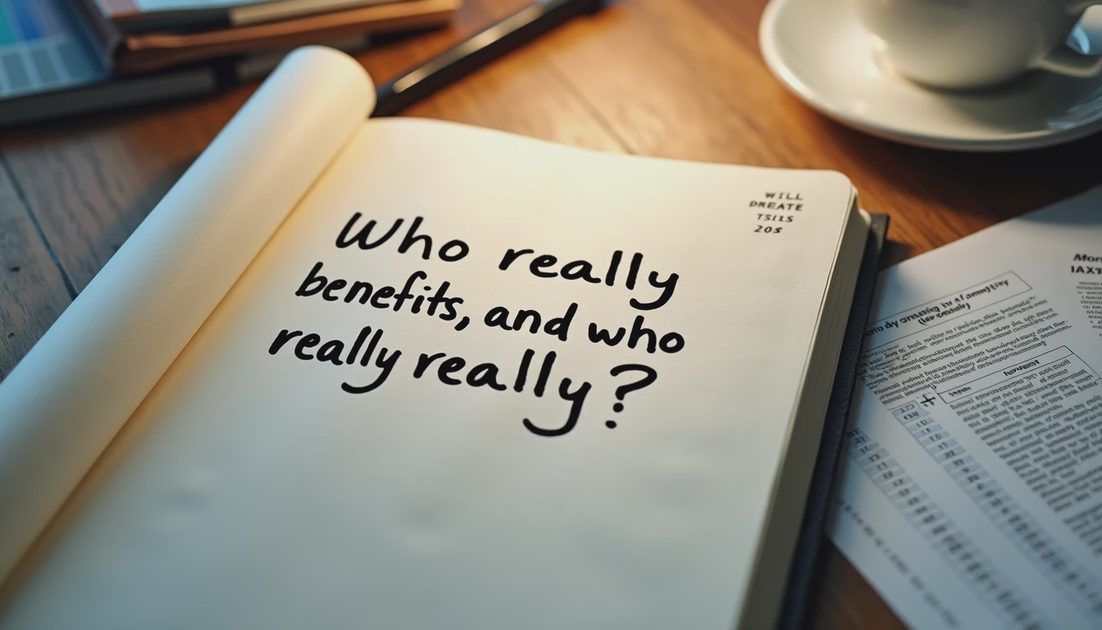
These questions keep the analysis grounded. They also explain the signature line that closes many of my notebooks: “Read the announcement. Then read the incentives.”
Why Field Notes and Reality Checks Matter
The categories on this site exist for practical reasons. Each one targets a distinct gap in current coverage:
The Release Notes tracks major model and product updates without treating every incremental change as a revolution.
Money, Markets & Motives looks at funding and partnerships as signals of infrastructure demand and competitive strategy rather than pure product success.
Policy Desk examines regulation with attention to what the text actually requires and who will bear the compliance cost.
The Reality Check tests claims against adoption data, workplace effects, and the distance between demos and dependable use.
Field Notes covers personal reporting, interviews, and the practical habits that shape the work.
“Field Notes” is the category for this opening essay because the project itself is a reporting decision. After eight years at WIRED and five at Fast Company, I left full-time staff roles to work independently. The decision was driven by a desire to control the pace and the framing. Independent work allows more time to compare public statements with internal incentives and to follow stories after the initial news cycle ends.
Living in Brooklyn, riding a bicycle between interviews, and keeping a paper notebook remain practical habits. The final page of every notebook still carries the same question: “Who really benefits, and who really pays?” That question is not rhetorical. It is a reporting prompt.

What Readers Can Expect Going Forward
The first twenty posts map a deliberate sequence. Early pieces will establish the difference between a model release and a product that changes workflows. They will show how to read funding announcements without accepting the marketing frame. They will outline the practical questions behind new regulation proposals. Later pieces will examine enterprise agents, cloud partnership economics, overstated adoption numbers, and the copyright questions companies continue to defer.
None of these pieces will claim that AI is either salvation or catastrophe. Both of those narratives are too convenient and too thin. The more useful work is slower: tracing the evidence, naming the incentives, and leaving the reader with a clearer sense of what is solid and what is still provisional.
If you follow AI product launch analysis, AI startup funding news, or U.S. AI policy news, you already know how quickly the volume grows. The aim here is not to add more volume. It is to add a filter that privileges evidence over excitement.
I will continue to talk with founders, researchers, policy staffers, and the people who implement these systems after the press cycle moves on. Their perspectives, cross-checked against public documents and financial signals, form the backbone of the reporting. The result should feel less like a highlight reel and more like a working briefing.
Read the announcement. Then read the incentives. That is the standing invitation.



No notes on this sheet yet.