Searches for cologix dal1 backup power capacity mw reflect a reasonable question about an increasingly important piece of infrastructure: how much electricity can a data center keep supplying when the grid fails? The short answer is that a public facility name and a power figure rarely tell the whole story. Backup capacity, utility capacity, critical IT load, and available expansion are related, but they are not interchangeable.
That distinction matters as cloud providers, AI companies, and enterprise customers compete for dependable data-center space. A headline number can sound impressive while leaving out the details that determine whether servers can actually continue operating during an outage. Here is what the available terminology means, what remains unclear, and how to evaluate the facility without turning a marketing label into a fact.
What cologix dal1 backup power capacity mw is supposed to describe
The phrase cologix dal1 backup power capacity mw appears to combine four separate ideas. Cologix is the data-center operator, DAL1 is a facility designation associated with its Dallas footprint, backup power refers to generators, batteries, and related electrical systems, and MW means megawatts, a measure of power at a particular moment.
That last point is easy to miss. A 10 MW backup system does not mean the facility has a fixed reserve of 10 megawatt-hours. Megawatts describe the rate of electricity delivery. The duration of operation depends on fuel supplies, generator efficiency, battery size, recharge capability, cooling demand, and the way the site is engineered.
A facility can also have more utility service than its customers are currently using. For example, a building with 20 MW of incoming electrical capacity might have a smaller contracted IT load and a separate amount of generator capacity. Those figures could all be accurate while describing different parts of the same site. That is why a single search result should not be treated as a complete electrical specification.
The difference between utility power and backup power
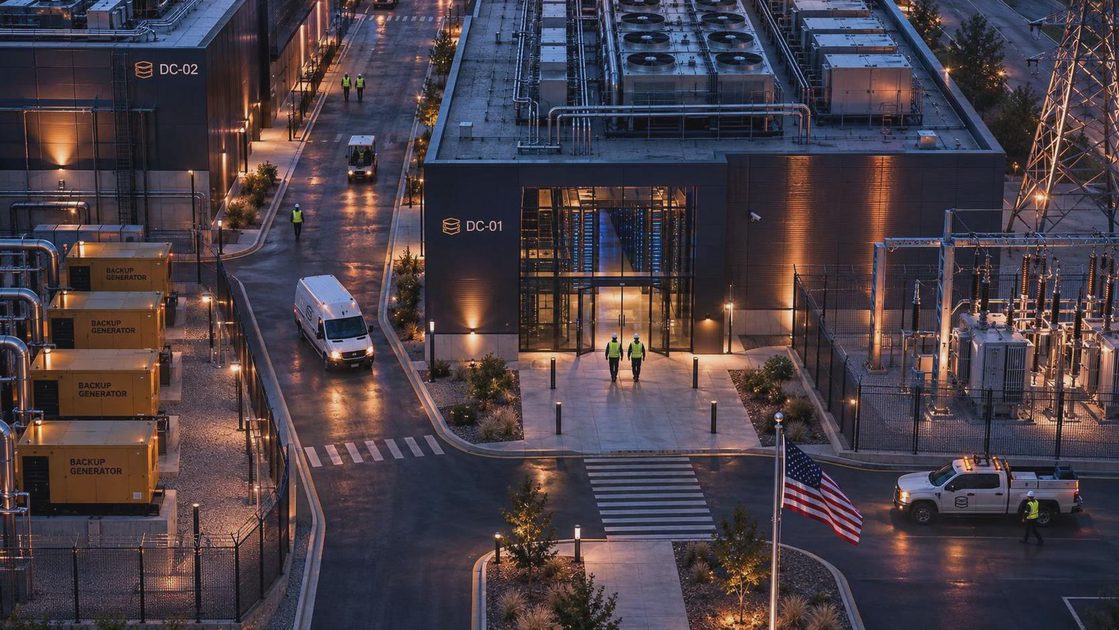
The grid normally supplies a data center through utility feeds, substations, switchgear, and distribution equipment. Backup systems sit behind that infrastructure. When voltage drops or an outage occurs, uninterruptible power supply systems typically bridge the gap immediately, while standby generators start and assume the longer-duration load.
Batteries are designed for continuity and clean transitions, not necessarily for running an entire campus for many hours. Generators provide sustained power, but their effective capacity depends on which equipment is considered essential. Cooling systems, pumps, fire protection, controls, lighting, security, and network equipment all consume electricity alongside servers.
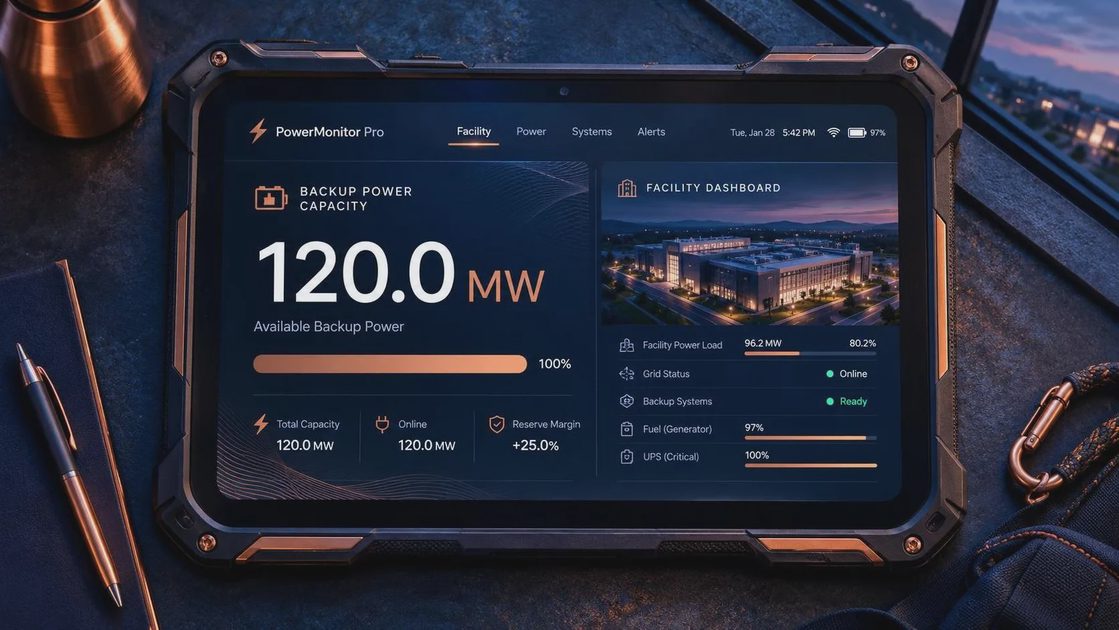
This is the practical problem with interpreting cologix dal1 backup power capacity mw. If a published figure refers only to generator nameplate capacity, it may not equal the maximum customer IT load. If it refers to critical load, it might exclude noncritical systems that are shed during an emergency. A serious evaluation needs the definition behind the number, not just the number itself.
Why redundancy matters more than the headline figure
Data centers commonly describe electrical resilience with terms such as N, N+1, 2N, or distributed redundant systems. N is the capacity required to serve the intended load. N+1 adds one extra component or capacity block, allowing maintenance or a single failure without interrupting service. 2N generally means two independent systems, each capable of supporting the required load, although the real design depends on the facility.
Those labels are useful, but they are not guarantees that every customer receives identical protection. A tenant may have a dedicated configuration, a shared configuration, or service-level commitments that specify different recovery expectations. The physical generator fleet is only one layer. Fuel delivery, maintenance procedures, electrical switching, cooling redundancy, and network connectivity all influence resilience.
For that reason, cologix dal1 backup power capacity mw should be read as an infrastructure question rather than a simple ranking exercise. A smaller site with well-designed redundancy can be more useful to a demanding customer than a larger site with a congested electrical path or limited expansion room.
What the figure could mean for AI and enterprise workloads
AI workloads make power discussions more complicated because accelerator servers can draw substantially more power than conventional enterprise racks. Dense deployments also create greater cooling requirements. A customer planning a large GPU cluster needs to ask about rack density, cooling design, deployment timelines, and usable critical capacity, not merely the building’s total electrical service.
The same applies to financial services, healthcare systems, media platforms, and software companies running high-availability applications. They usually care about predictable service during an outage, the ability to add capacity, and contractual remedies if availability targets are missed. Backup power is part of that package, but it is not the package itself.
A claim about cologix dal1 backup power capacity mw therefore becomes meaningful only when paired with the intended workload. Ten megawatts supporting a lightly loaded facility is not the same operational proposition as ten megawatts serving dense accelerators with demanding cooling systems. Capacity has to be connected to usable design, not separated from it.
How to verify cologix dal1 backup power capacity mw
Start with primary material from the operator, including facility specifications, technical brochures, service guides, and current sales documentation. Look for definitions such as total facility power, critical load, customer IT load, generator capacity, and expansion capacity. If a document uses only “MW” without explaining the boundary, treat the figure as incomplete rather than precise.
Then ask direct questions. Is the stated capacity live today or planned? Does it include mechanical cooling? Is the backup architecture N+1 or 2N? How long can generators operate at the expected load? Are fuel contracts and replenishment procedures documented? What happens during maintenance? Are customers connected to one electrical path or multiple independent paths?
A prospective tenant should also request the service-level agreement and a description of incident communications. A generator can start successfully while a downstream switch, cooling component, or customer distribution unit fails. Resilience is a chain, and the weakest link gets the press briefing eventually.
What is known, claimed, and still unclear
What is generally knowable is that Cologix operates data-center infrastructure in Dallas and that DAL1 refers to a specific facility designation. It is also reasonable to say that backup power is intended to maintain operations when normal utility service is interrupted. These are straightforward descriptions of the infrastructure category.
What requires documentation is the exact backup capacity associated with the site, the portion available to customer IT equipment, and the redundancy model at each deployment area. Public listings, third-party databases, and copied sales language can become outdated when facilities are expanded or reconfigured. They should be treated as leads for verification, not final engineering evidence.
The useful conclusion from cologix dal1 backup power capacity mw is not a dramatic capacity verdict. It is a reminder to separate a facility’s marketed scale from its operational detail. Read the announcement. Then read the incentives: operators want to demonstrate resilience, customers want dependable power, and both sides benefit when the definition of capacity is explicit.




No notes on this sheet yet.