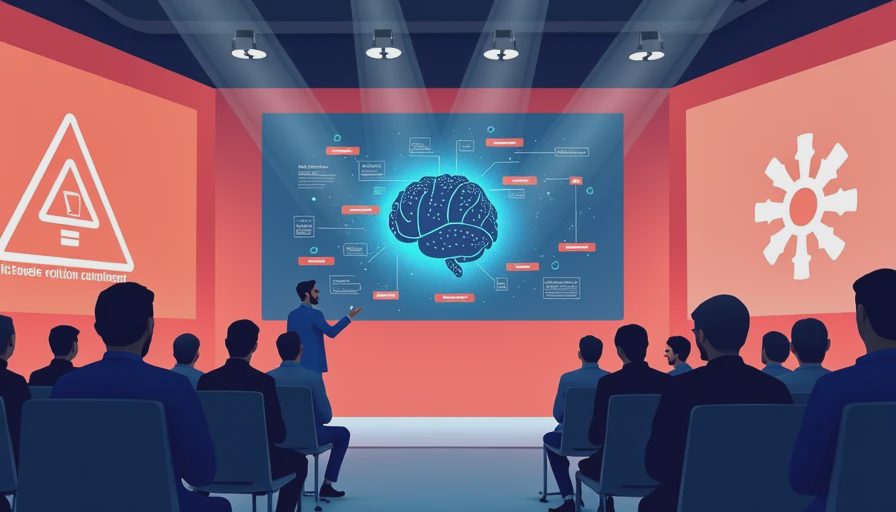
The ai risk summit has become a useful search term for a much larger argument: how should governments, companies, researchers, and the public manage increasingly capable artificial intelligence? The phrase can refer to a specific event, a series of conferences, or a broader policy conversation. That ambiguity matters. A polished stage, a famous speaker, and a dramatic forecast are not the same thing as evidence.
The right way to follow an ai risk summit is to separate three layers. First, identify what actually happened: who attended, what was announced, and which documents were published. Second, distinguish claims from demonstrated results. Third, ask who gains power, revenue, or regulatory influence from the agenda. Read the announcement. Then read the incentives.
Why the ai risk summit matters beyond the stage
An ai risk summit can bring together people who rarely share the same vocabulary. Safety researchers may focus on model evaluations and dangerous capabilities. Government officials may discuss national security, procurement, or liability. Executives often emphasize deployment, competitiveness, and the cost of delay. Civil society groups may concentrate on labor, privacy, discrimination, and access.
Those priorities overlap, but they are not interchangeable. A company can improve testing for a model while still collecting more personal data than users expect. A government can publish a voluntary framework while leaving enforcement uncertain. A nonprofit can produce valuable research without having the budget to monitor every commercial system. The event is meaningful when it converts broad concern into specific commitments, responsible owners, deadlines, and public evidence.
That is also why the ai risk summit should not be judged by its most quotable line. “Safe AI” can mean a technical alignment problem, a cybersecurity program, a consumer protection regime, or a diplomatic effort to prevent misuse. Before reacting, readers should ask which risk is being discussed and whose definition controls the room.
What to verify before trusting the headlines
Start with the primary material. Look for an official agenda, speaker list, policy statement, evaluation report, or company release. Check whether a promise is binding or voluntary. “We support testing” is not the same as funding an independent testing program. “We will work with regulators” is not the same as accepting audit access or penalties for noncompliance.
Next, inspect the language around time. An announcement about future safeguards can sound substantial while leaving the present system unchanged. If a provider says it will develop a benchmark, ask whether the benchmark exists, who can reproduce it, and whether it measures real-world harm or only laboratory performance. If officials promise coordination, ask which agency has authority and what happens when a company refuses.
An ai risk summit may produce useful agreements, but signatures alone prove little. The practical test is whether a commitment survives contact with budgets, product launches, and competitive pressure. A firm that spends millions on safety research deserves credit for that work; it has not thereby demonstrated that every risk is controlled.
The money behind AI safety language
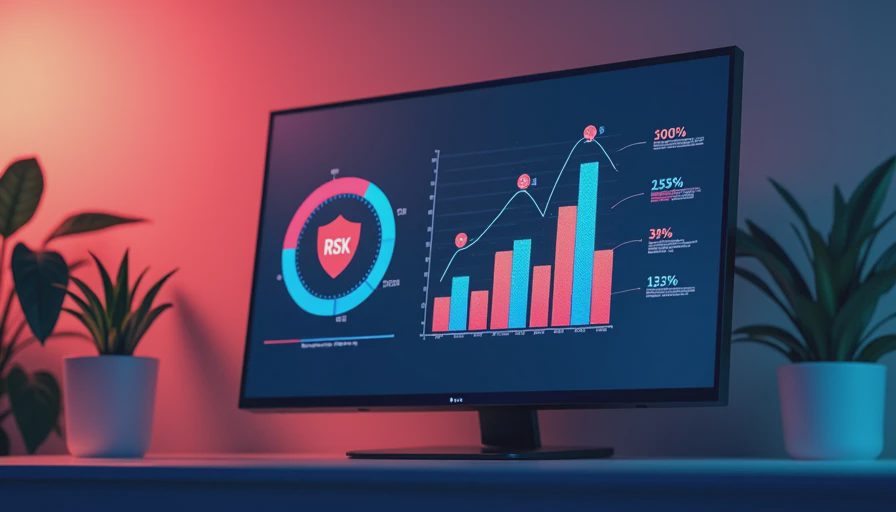
AI risk is also an economic story. Cloud providers want large customers to keep buying computing power. Model companies want room to release new products without facing rules that favor larger incumbents. Investors want growth, but they also want to know whether a regulatory shock could make a portfolio company unviable. Governments want domestic capacity and may frame safety policy as a competitiveness strategy.
An ai risk summit therefore deserves financial scrutiny. Who paid for the event? Which companies supplied speakers, research, or sponsorship? Did the agenda spend equal time on harms that affect users and workers, or mostly on risks that could threaten industry freedom? Sponsorship does not invalidate an argument, but it tells readers where to look for incentives.
There is a second financial question: who pays for safeguards? Independent audits, secure infrastructure, red-team exercises, incident reporting, and human review all cost money. If a proposal requires smaller firms to meet the same obligations as a global platform, it could improve safety while unintentionally strengthening the largest vendors. Good policy must address both risk and market structure.
The risks that receive attention—and those that do not
High-profile discussions often focus on future systems that might become difficult to control. That question deserves serious research, but it should not crowd out problems already affecting people. Deepfake scams, automated discrimination, exposed personal information, unreliable medical guidance, insecure code, and workplace surveillance are not hypothetical categories.
A useful ai risk summit connects long-term research to current accountability. It asks whether an affected person can appeal an automated decision, whether a company must disclose an incident, and whether a regulator can inspect the system without relying on a vendor’s marketing materials. It also asks whether workers who label data, moderate content, or clean up AI errors are paid fairly and protected from harmful conditions.
The balance matters because dramatic future scenarios can be politically convenient. They invite grand speeches and distant promises. Current harms are less cinematic and more administratively difficult. A serious program should handle both: research on advanced capabilities and enforceable protections for people dealing with imperfect systems today.
How businesses should use the discussion
For an executive, the ai risk summit is not merely a conference to watch on social media. It can be a prompt for an internal inventory. Where is the company using generative AI? Which vendors process customer data? Who approves a model before launch? What happens when an output is wrong, discriminatory, confidential, or unsafe? The answers should be written down rather than stored in the collective memory of one enthusiastic product manager.
A practical review can begin with contracts and data flows. Confirm whether a vendor uses submitted information for training. Define retention periods and access controls. Require human review for high-impact decisions, including hiring, lending, insurance, health services, and housing. Establish an incident channel with a named owner and a deadline for escalation. These steps are less glamorous than a panel about machine superintelligence, but they are more likely to protect a business this quarter.
Investors can apply a similar test. Ask whether a company’s safety claims are backed by staff, budget, testing, and documented changes to the product. A slide promising “responsible AI” is not a control system. The ai risk summit is useful when it helps turn principles into operating evidence.
What to watch after the event
The most revealing developments usually arrive after the microphones are packed away. Watch for published evaluations, agency guidance, procurement rules, enforcement actions, and changes to product documentation. Track whether companies release incident reports or quietly revise policy pages. Note who receives funding and whether independent researchers gain access to systems.
Also watch the vocabulary. If “risk” expands to include only threats to national competitiveness, the agenda has narrowed. If it covers privacy, labor, security, consumer rights, and concentration of power, the discussion is more credible. An ai risk summit should leave readers with measurable questions, not just a mood of urgency.
The central question is simple: what changed, and what did not? If the event produced a funded program, accountable institution, public benchmark, or enforceable rule, it may deserve lasting attention. If it produced photographs, pledges, and another round of carefully managed anxiety, skepticism is the appropriate response. The ai risk summit can help shape better AI governance, but only implementation separates a serious policy effort from an expensive group discussion.





No notes on this sheet yet.