
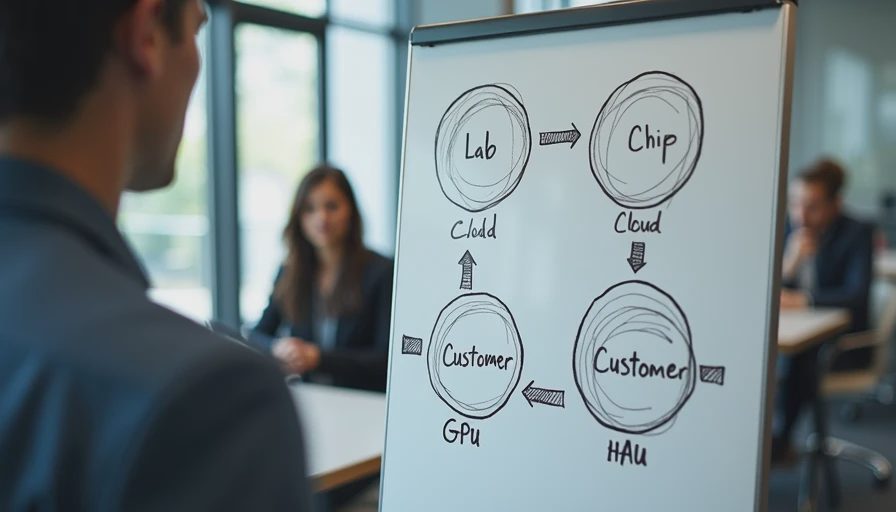
Generative AI business news likes origin stories about models. The quieter story is about landlords. The companies that train and serve large systems need accelerators, buildings, power, and global distribution. The companies that already sell those things—cloud providers—need a reason for customers to keep expanding consumption. Out of that mutual need come the partnerships that keep appearing in the same press-release template: a lab, a cloud, a multiyear commitment, sometimes an equity slice.
AI company valuation analysis that ignores this structure will treat every lab as a standalone software firm. Many are, in part, distribution arms and committed spenders inside someone else’s data center.
Why the Same Clouds Keep Showing Up
There are only a few operators who can offer the combination of chips, networking, regional presence, and enterprise trust at the scale labs want. That scarcity makes partnerships look like strategy even when they are also just procurement. A lab that signs with a major cloud gets capacity and a sales channel. The cloud gets consumption, a showcase, and a hedge against a rival’s showcase.
I covered cloud platforms before they were AI billboards. The commercial logic is familiar: attach a must-have workload to a bill that is hard to unwind. What is new is the size of the pre-commit and the way equity, credits, and capacity get braided together until “customer,” “investor,” and “supplier” are the same institutions wearing different hats.
What a typical partnership bundle can include
Reserved or preferred access to accelerators
Cloud credits that appear in a funding headline as if they were cash
Distribution inside the cloud’s console and marketplace
Co-selling into the cloud’s existing enterprise accounts
An equity investment or warrant
Shared marketing that implies exclusivity even when it is not
Read the announcement. Then read the incentives. The cloud needs utilization. The lab needs GPUs. The press needs a simple love story.
Follow the Bill, Not the Friendship
The economically interesting question is not whether the logos like each other. It is who can redirect the traffic. If a lab’s API is deeply integrated into a cloud’s identity, billing, and data services, switching costs rise. If a lab trains on one cloud and serves on many, the training partner has less leverage than it looks on stage.
Public filings from large U.S. tech firms have, in recent years, described sharply higher capital expenditure tied to servers and data centers. That is the physical counterpart to the partnership announcements. Chips, buildings, and electricity are not metaphorical. They are line items.
A reader’s grid
Role | What they want | What they fear |
|---|---|---|
Foundation lab | Capacity, distribution, cash | Being a feature of a cloud |
Cloud provider | Consumption growth, differentiation | A rival exclusive, empty clusters |
Enterprise customer | One bill, one support number | Lock-in and opacity of model routing |
Chip vendor | Demand visibility | A sudden pause in training builds |
Regulator | Fair access and competition | A stack that cannot be unwound |
Artificial intelligence industry news that only interviews the lab misses four of those five rows.
What Enterprises Should Notice in the Fine Print
If you buy a model through a cloud, you are accepting a chain: the lab’s terms, the cloud’s terms, and sometimes a marketplace’s terms. Data paths, training-use defaults, regional residency, and support escalation all live in that chain. Partnership marketing will not highlight the seams. Your counsel should.
There is also a concentration issue that is practical rather than ideological. If your “multi-model strategy” runs through one cloud’s keys, you have a multi-model strategy with a single landlord. That can still be a rational buy. It is not independence.
Questions I ask when a partnership is the story
Is there an equity relationship, and does it shape product roadmap access?
Are credits part of the reported “investment”?
Can the lab serve the same model on other clouds without delay?
Who holds the customer relationship when something breaks?
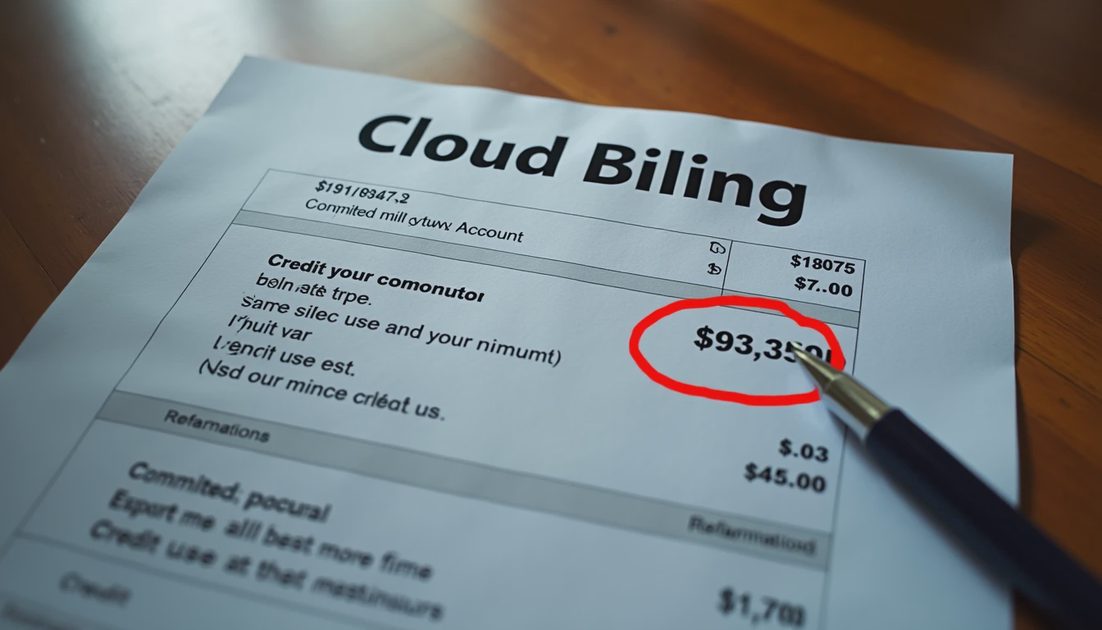
What happens to pricing if the committed capacity is underused?
I ride past data-center-related construction on reporting trips more often than I expected to when I was covering apps. The geography of the boom is not only San Francisco. It is power markets and permitting offices. Partnerships are how that geography is financed.
The Story Under the Story
Here is what changed, and what did not. Model quality and attention created a demand shock for a small set of inputs. Clouds and chip vendors were positioned to sell those inputs. Startups and labs that wanted to move fast rented rather than built, then sometimes tried to build anyway. The need to ask who bills whom did not change.
Who really benefits, and who really pays? In the first phase, owners of scarce capacity benefit. Later, enterprises pay in consumption, and the public pays in energy and land use. The partnership announcement is the polite version of that transfer.
Keep the friendship language out of the lede. Put the commit, the credits, and the switching costs in. That is the Money, Markets & Motives version of the boom.

No notes on this sheet yet.