
AI product reviews for businesses too often stop at the moment the demo lands. A prompt is typed. A document appears. The room applauds. Then the meeting ends, and nobody has asked what happens to that document after it leaves the stage. I have watched this sequence for more than a decade, first at WIRED, later at Fast Company, and now as an independent reporter. The demo is a proof of possibility. It is not a proof of workflow.
Enterprise AI trends are full of tools that can produce a plausible first draft. The workflow is everything around that draft: retrieval, permissions, review, exception handling, audit, and the person who still has to click send. If you skip those steps, you will confuse a successful show with a successful process.
Why Demos Are Designed to Succeed
A demo is a controlled environment. The data is clean. The prompt is rehearsed. The failure cases have been removed. The presenter knows which question not to ask. That is not a trick unique to artificial intelligence. It is how software has been sold for years.
What changed is fluency. A language model can look finished even when the underlying process is not. A wrong answer delivered in complete sentences is harder to catch than a crash. That is why AI adoption statistics that count “employees who tried the tool” tell you almost nothing about “employees who depend on the tool.”
The hidden work around a successful demo
Someone prepared the example files and stripped out the messy fields.
Someone stood by to re-prompt if the first answer drifted.
Someone already knew the “right” output and would have written it by hand if needed.
Nobody timed the review step, which is often longer than the generation step.
Nobody asked what happens when the input is an email thread, a scanned PDF, or a half-complete ticket.
I do not blame vendors for putting their strongest case forward. I blame coverage that treats the strongest case as the typical case. Read the announcement. Then read the incentives.
What a Workflow Requires That a Demo Does Not
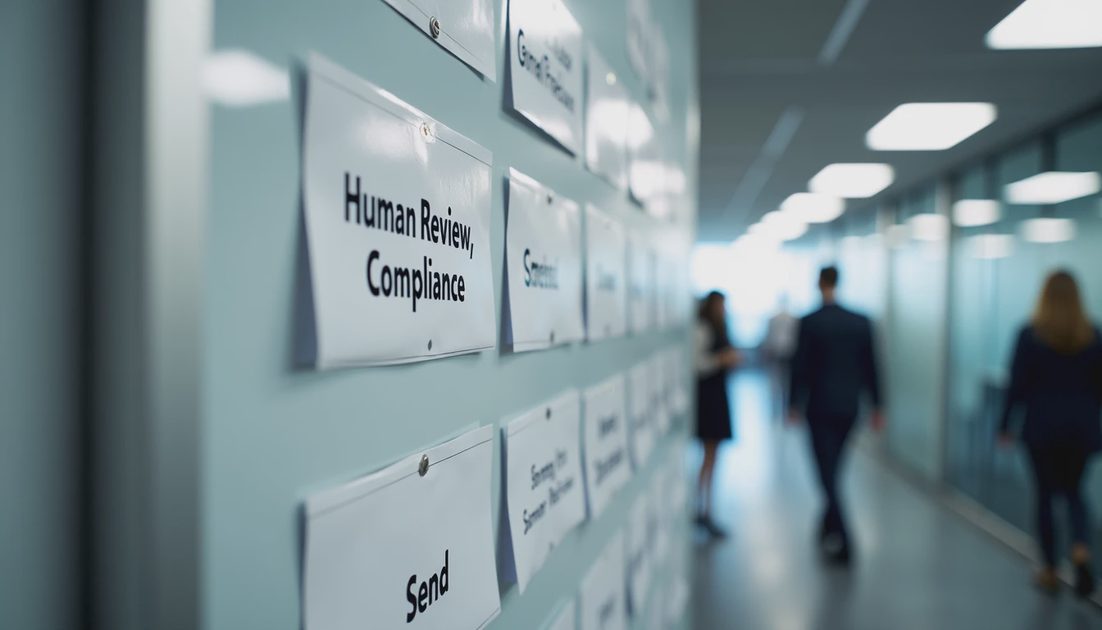
A workflow has to survive Tuesday afternoon. It has to survive a new intern, a missing field, a policy change, and a customer who used the wrong form. It has to produce an artifact another system can accept. It has to leave a record a lawyer or an auditor can read later.
When I talk with operations leads and IT managers, the conversation rarely stays on model quality. It moves to handoffs. Who reviews the output? How is disagreement resolved? Where is the source of truth if the model and the database conflict?
A simple comparison
Question | Demo answer | Workflow answer |
|---|---|---|
Input quality | Curated sample | Tickets, PDFs, and half-complete records |
Time to output | Seconds on stage | Minutes or hours including review |
Error handling | Presenter recovers live | Documented fallback and escalation |
Permissions | Presenter has god-mode access | Role-based access and logging |
Success metric | Audience reaction | Cost, error rate, and rework |
The right-hand column is the one that decides whether a tool is worth buying. AI product reviews for businesses that stay in the left-hand column are entertainment.
How to Test a Tool After the Applause
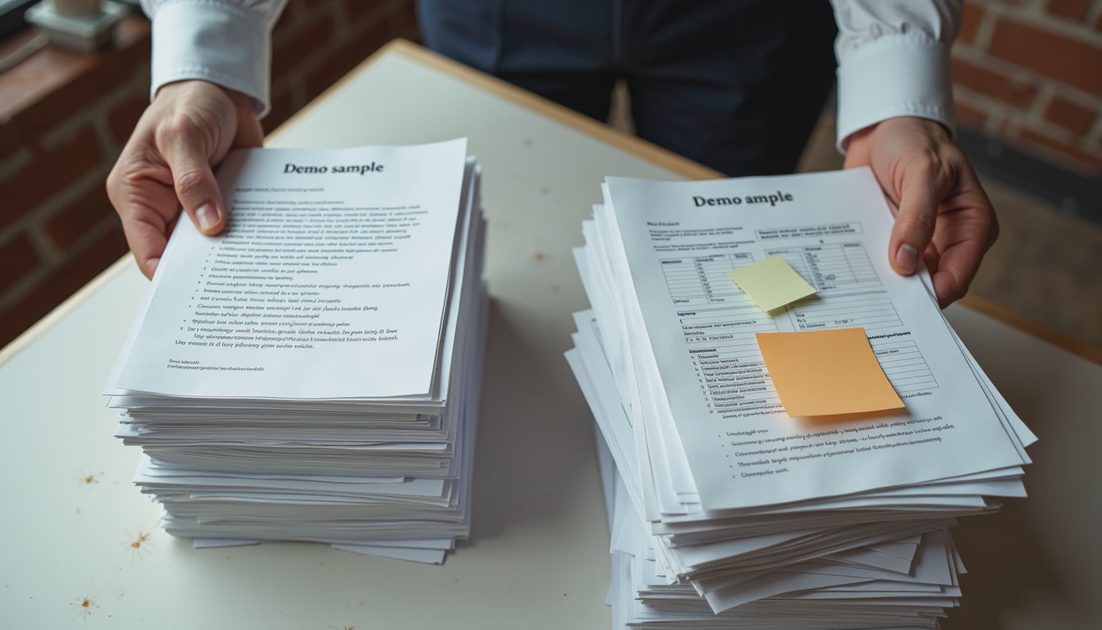
I keep a field test that is unglamorous on purpose. I ask the vendor or the internal champion to run the tool on three real items from last week, with names and secrets removed. Then I watch the human process, not just the model output.
A three-item field test
The easy item: If this fails, the tool is not ready for a second meeting.
The messy item: Mixed formats, missing fields, conflicting dates. This is where most “80 percent accurate” claims go to die—without me needing a fake precision number, because the rework is visible.
The consequential item: Something that would be embarrassing or expensive if it were wrong. Watch who is willing to hit send without a rewrite.
If the champion refuses to run the messy item, that refusal is data. It tells you the demo was the product.
Marcus, who spends his days in public-radio studios, has a phrase for this: the mix sounds great in the control room and different in the car. AI tools have the same problem. The control room is the keynote. The car is the actual queue.
What Changed—and What Did Not
Model quality on many drafting and coding tasks has improved in public evaluations. That is real. Copilots inside widely used office and developer tools have also made trial easy. That is also real. What has not automatically followed is a shorter path from generation to a finished, trusted artifact.
Here is what I tell readers who are being asked to “roll this out by quarter end.” Count the oversight. Count the rework. Count the cases the tool should not touch. Then decide. A demo that worked is a reason to investigate. It is not a reason to declare the workflow solved.
This is meaningful. It is not yet a breakthrough in how most American offices actually finish their work. The Reality Check category exists so that sentence can be said in public, calmly, with the evidence in view.



No notes on this sheet yet.