The question “will ai replace mechanical engineers” sounds like a prediction about software. It is really a question about responsibility, economics, and how much of an engineering job consists of repeatable digital work. AI can already generate design concepts, summarize test data, suggest material choices, and help write simulation code. It cannot simply absorb liability when a pressure vessel fails, explain a confusing requirement to a customer, or inspect a machine whose behavior differs from the model.
The short answer is that AI is more likely to change mechanical engineering than erase it. Some entry-level tasks will shrink. Certain teams will produce more designs with fewer people. Engineers who treat AI as a serious tool rather than a novelty will probably gain an advantage. But the profession is tied to physical systems, safety standards, manufacturing constraints, and messy evidence. Those are stubbornly difficult to automate.
What AI can already do in mechanical engineering
Modern engineering work is full of structured information, which makes it attractive to machine-learning companies. Generative design tools can propose lightweight brackets or frames after receiving constraints for load, material, manufacturing process, and cost. Computer-aided engineering platforms can help prepare computational fluid dynamics models, identify unusual sensor readings, and compare design variations. Large language models can draft Python or MATLAB scripts, translate technical notes, and search a company’s internal documentation.
This matters because engineers often spend hours on work that is necessary but not especially creative. Cleaning test data, converting units, formatting reports, checking a bill of materials, or creating an initial CAD concept can consume a week around a major deadline. A capable assistant can reduce that work from days to hours. A small manufacturer that cannot justify a large analysis department may also use automation to evaluate more options before committing to a prototype.
The commercial incentive is obvious. If a $100,000 design project can be completed faster, a company can either lower its price, increase its margin, or pursue more projects with the same staff. That does not automatically mean fewer engineers, but it does change what managers consider acceptable output from each person.
Why physical reality remains a serious obstacle
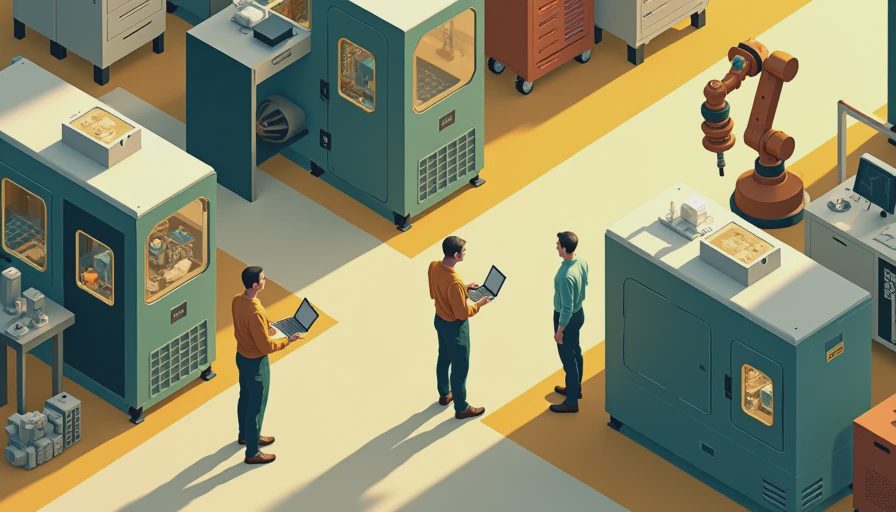
A design that looks excellent in a simulation can fail because a supplier changed a metal alloy, a weld contains a defect, a bearing was installed incorrectly, or a machine vibrates at a frequency absent from the model. AI systems are particularly vulnerable to incomplete specifications and misleading historical data. They can produce a confident answer when the real issue is that the question was poorly defined.
Mechanical engineers work across that gap between a clean digital model and an untidy physical product. They select tolerances, interpret standards, visit factories, observe assembly problems, and decide whether a test result is plausible. They also negotiate tradeoffs. A lighter component may cost more to manufacture. A cheaper material may corrode sooner. A faster motor may create unacceptable noise. These are not merely optimization problems; they are business and safety decisions with consequences outside the spreadsheet.
A human engineer remains accountable for signing off on many designs, depending on the project and jurisdiction. Professional engineering rules, product-liability exposure, workplace safety requirements, and customer contracts create a strong reason for organizations to keep qualified people in the loop. An AI vendor can provide a recommendation. It does not become the responsible party when a bridge component, medical device, aircraft part, or industrial pump causes harm.
Will AI replace mechanical engineers at the entry level?
The entry-level market is where the pressure could appear first. Junior engineers commonly handle drawing updates, basic calculations, documentation, test preparation, and routine design changes. Those activities are increasingly suitable for software assistance. A manager may ask one early-career engineer to review 200 design variations rather than assign several people to generate them manually.
That shift creates a genuine concern: how do new engineers build judgment if software performs the beginner work? The profession has an apprenticeship problem. People learn failure modes by checking drawings, visiting production floors, and seeing how apparently minor decisions create expensive defects. If companies automate every introductory task without creating better training, they could save money today while weakening their future engineering pipeline.
Still, automation does not remove the need for junior talent. Someone must validate model assumptions, maintain design history, communicate with machinists, and investigate results that do not fit expectations. The most valuable early-career skill may become the ability to audit an AI-generated design rather than produce every first draft by hand. That is a change in curriculum and workplace practice, not proof that the job disappears.
The jobs most exposed to automation
Routine, highly standardized work faces the greatest pressure. Engineers who spend most of their time producing minor CAD revisions, repetitive compliance documents, simple component layouts, or standard calculations may see their role narrowed. Outsourcing and specialized software already put pressure on some of these tasks; AI adds another layer of competition.
The risk is not evenly distributed across the field. A mechanical engineer designing custom equipment for a pharmaceutical plant works in a different environment from one updating standardized consumer-product assemblies. Robotics, aerospace, energy, automotive, HVAC, medical devices, and industrial machinery all use different rules, testing practices, and tolerance for uncertainty. A tool that performs well on a familiar bracket may be far less reliable on a novel thermal system.
When companies discuss productivity, employees should read the incentives carefully. “More efficient engineering” can mean more time for experimentation, but it can also mean fewer people expected to deliver the same volume of work. The announcement says the tool will assist engineers. The budget may reveal whether leadership intends assistance or substitution.
The skills that become more valuable
Engineers who understand manufacturing, testing, materials, controls, and systems integration will remain difficult to replace because they connect separate parts of the product lifecycle. So will people who can translate an ambiguous customer request into measurable requirements. AI can offer ten possible concepts; someone still has to determine which one can be built, certified, repaired, and sold at a sensible price.
Data literacy will matter, but not in the narrow sense of learning every new model. Engineers should know where training data came from, how uncertainty is represented, which assumptions drive a result, and how to design a test that could prove the model wrong. Familiarity with CAD automation, Python, simulation tools, digital twins, and version control can make an engineer faster without turning that person into a software specialist.
Communication is equally practical. The engineer who can explain why an attractive AI-generated design violates a machining limit will be more useful than the person who accepts the design because it looks polished. Judgment, documentation, and the courage to stop a bad process are not glamorous skills, but failed products are expensive teachers.
What should mechanical engineers do now?
Start with a personal task audit. Track a normal week and separate work into three categories: repetitive digital tasks, judgment-heavy decisions, and physical or interpersonal work. Test AI on the first category using nonconfidential examples. Ask it to generate a script, compare design alternatives, or draft a test plan, then verify every output against known results. This builds practical fluency without handing over responsibility.
Next, learn the tools used in your industry rather than chasing every general-purpose chatbot. A manufacturing engineer may gain more from understanding automated inspection and manufacturing execution systems than from memorizing prompt tricks. A thermal engineer may benefit from simulation automation and better data pipelines. Employers pay for useful results, not enthusiasm about technology in the abstract.
Finally, build evidence of judgment. Keep a record of assumptions, failed prototypes, test findings, and design decisions. A portfolio showing how you caught an error or improved a production process can be more persuasive than a gallery of attractive CAD images. If someone asks will ai replace mechanical engineers, the strongest answer is not a slogan. It is a demonstrated ability to use automation while knowing when not to trust it.
The likely outcome
Will AI replace mechanical engineers? It will replace portions of mechanical engineering work, especially repetitive drafting, documentation, and early-stage exploration. Some organizations will use those gains to reduce hiring; others will use them to develop more products, run more tests, or address talent shortages. Both outcomes can happen at once.
The profession is not protected by tradition. Engineers will need to adapt as tools improve, and companies will need to preserve training, review, and accountability rather than treating software output as engineering judgment. Read the announcement. Then read the incentives. The future belongs less to engineers who refuse AI than to engineers who can use it quickly, question it rigorously, and remain responsible for what eventually leaves the screen.





No notes on this sheet yet.