
AI industry commentary is easy to write from a single window. The press release is formatted. The quotes are clean. The product, sitting in another window, is slower, stranger, and less willing to stay on message. I have made a habit of opening both. It is the least sophisticated method I know, and it still catches claims that a more elaborate process would miss.
This Field Notes piece is about that habit. It is not a manifesto. It is what I actually do after the embargo lifts, usually at a kitchen table in Brooklyn, with a secondhand office monitor that Marcus rescued from a station upgrade.
Why One Screen Is Never Enough
A press release is an argument. It selects a customer, a number, a competitor, and a future. A product is a set of states: login, empty, error, rate-limited, permission-denied, almost-right, and actually useful. If you only read the argument, you will describe the company’s intended object. If you only click around, you may miss the contract and the roadmap. You need both.
I learned this covering enterprise platforms whose consoles did not match their keynotes. Generative tools make the mismatch more polite. The interface still answers. It just answers with a kind of confident fog.
My first-hour setup
Full-screen the release, the blog post, and the investor note if there is one.
Full-screen the product, the docs, the status page, and the pricing page.
Write down three claims from screen one that should be visible on screen two.
Try to make those claims fail in ordinary ways: empty input, long input, a file the demo did not use.
Note what requires a sales call that the release described as self-serve.
Read the announcement. Then read the incentives. The incentive of screen one is speed and coherence. The incentive of screen two is not to get sued, over-provisioned, or embarrassed by a crawler.

What Usually Diverges
Pricing diverges. The release speaks in seats and “simple.” The pricing page speaks in tokens, minimums, and hidden support tiers. Availability diverges. The release says “today.” The product says “join the waitlist” or “contact sales.” Safety diverges. The release says the model “refuses disallowed requests.” The product, on a slightly different prompt, does not, or refuses so broadly that a legitimate workflow breaks.
I do not treat divergence as a gotcha for its own sake. I treat it as the story. AI news analysis that reprints screen one is a wire service. The brief I want to write lives in the delta.
Common deltas I log
Screen one claim | Screen two check | What I write if they diverge |
|---|---|---|
Generally available | Region, plan, and waitlist flags | Name the actual availability |
Built for enterprise | SSO, logs, retention, admin roles | List what is missing |
Outperforms X | Docs, evals, and a pinned model ID | Downgrade to “the vendor says” |
Saves time | Any mention of review, QA, or human in the loop | Ask who does the leftover work |
Private by default | Training-use toggle and subprocessors | Quote the data addendum |
The table is taped inside a notebook cover. It is not clever. It is faster than relying on memory after a day of briefings.
A Day in the Dual-Window Method
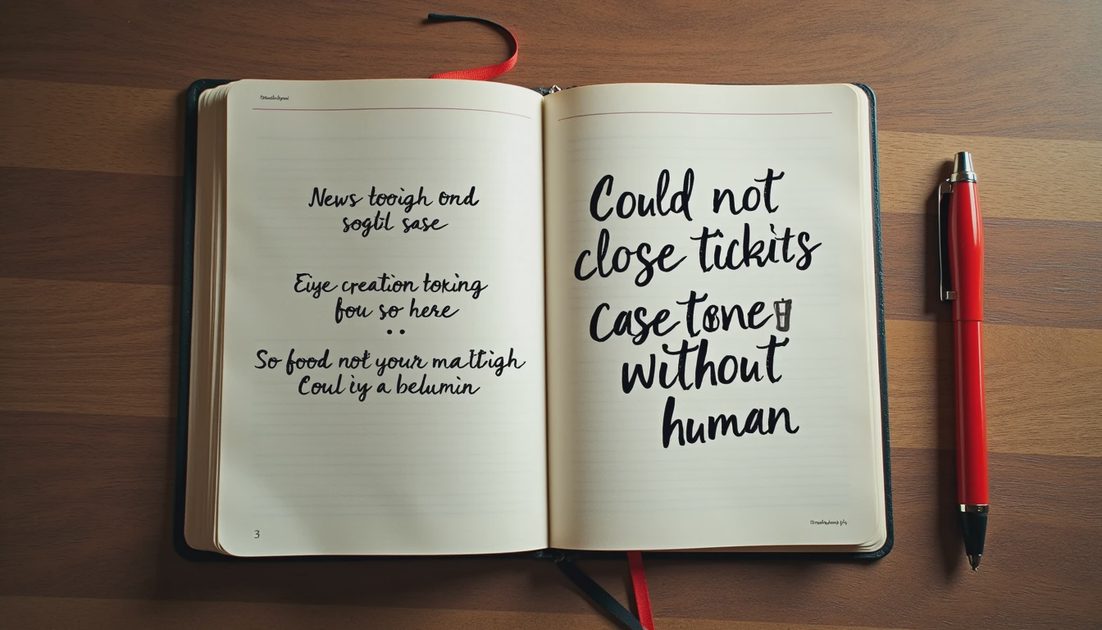
On a recent cycle of model and product notes, I boiled water for pasta while an embargoed blog post sat on the left monitor. The right monitor had the console. By the time the water boiled, I knew the “agent” could draft a ticket summary and could not close the ticket without a human. That sentence is more useful than the release’s sentence about “autonomous workflows.”
I still go to launches in person when I can. I still talk to people who implement the tools. The dual window does not replace reporting. It keeps me from starting the reporting on the company’s terms.
Elena Whitfield, independent, 39, former WIRED and Fast Company: that biography is only relevant here because staff jobs sometimes made the second window harder to defend. Independent work makes it ordinary. Ordinary is the point.
What I refuse to do from a single screen
Write that a product “launched” if I cannot reach it.
Write that a feature is “enterprise-ready” without seeing admin controls.
Write that a model is “safer” without a pointer to the policy and a test of my own.
Confuse a research preview with a SKU.
Those refusals will make some days quieter. Quiet is under-supplied.
Why This Belongs in Field Notes
This is not a product review column. It is a craft note. If you are a reader who only has one lunch break, you can steal the method: two windows, three claims, one attempt to break them. If you are a founder, assume someone like me is doing this and write the release to survive it. If you are a spokesperson, send the docs with the embargo, not after the first story ships.
Here is what changed, and what did not. Tools got easier to try, which makes screen two more available to reporters who are not in the partner program. The press release did not get more modest. Who really benefits, and who really pays? The company benefits if screen one travels alone. The buyer pays for the parts that only appear on screen two.
Keep both screens on. Then write.


No notes on this sheet yet.